Where Is Our Sun in the Milky Way Universe
Milky Way galaxy: Facts about our galactic home
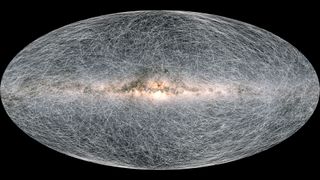
Studying the Milky Way used to be notoriously difficult. Astronomers sometimes compare the effort to attempting to describe the size and structure of a forest while being lost in the middle of it. From our position on Earth, we simply lack an overview. But two ground-breaking space telescopes launched since the 1990s have helped usher in the golden age of Milky Way research. Major strides have been made, especially since the 2013 launch of the European Space Agency's (ESA) Gaia mission.
Visible in the night sky (where light pollution permits) as a mesmerizing glowing band of stars and dust, the Milky Way has fascinated humans for millennia. Attempts to chart the galaxy date back to ancient Greece. But it wasn't until the 1920s that astronomers realized that the Milky Way is only one of many galaxies populating the universe. Up until then, most believed the Milky Way and the universe were one.
American astronomer Edwin Hubble, the one in whose honor the famous space telescope was named, cracked the mystery when he managed to determine the distance of the Andromeda nebula. This fuzzy object, known since the 18th century, was originally thought to be just a different kind of star in the Milky Way. But Hubble's observations proved that Andromeda was much too far away and was, in fact, a galaxy on its own, just like the Milky Way. Since then, astronomers have learned that Andromeda will one day bring about the end of our galaxy as we know it when the two collide some 4 to 5 billion years from now.
Since Hubble's time, astronomers have figured out that there are billions of galaxies in the universe of various shapes and sizes. And they've made major strides in understanding the Milky Way.
Related: Stunning photos of our Milky Way galaxy
The Milky Way: How big is it and what is its structure?
Milky Way Quick Facts
– Galaxy type: Spiral
– Age: 13.6 billion years (and counting)
– Size: 100,000 light-years across
– Number of stars: about 200 billion
– Rotation time: 230 million years
Our Milky Way galaxy is about 100,000 light-years across and is a spiral galaxy in structure.
Improving telescope technology enabled astronomers to distinguish the basic shape and structure of some of the closest galaxies before they knew they were looking at galaxies. But reconstructing the shape and structure of our own galactic home was slow and tedious. The process involved building catalogs of stars, charting their positions in the sky and determining how far from
Earththey are.
Dutch astronomer Jan Oort, sometimes dubbed the master of the galactic system, was the first to realize that the Milky Way isn't motionless but rotates, and he calculated speeds at which stars at various distances orbit around the galactic center. It also was Oort who determined the position of our sun in the vast galaxy. (The Oort Cloud, a repository of trillions of comets far from the sun, was named after him.)
Gradually, a complex picture emerged of a spiral galaxy that appears quite ordinary.
At the center of the Milky Way sits a supermassive black hole called Sagittarius A*. With a mass equal to that of four million suns, the black hole, discovered in 1974, can be observed in the sky with radio telescopes close to the constellation Sagittarius.
Everything else in the galaxy revolves around this powerful gateway to nothingness. In its immediate surroundings is a tightly packed region of dust, gas and stars called the galactic bulge. In the case of the Milky Way, this bulge is peanut-shaped, measuring 10,000 light-years across, according to ESA. It harbors 10 billion stars (out of the Milky Way's total of about 200 billion), mostly old red giants, which formed in the early stages of the galaxy's evolution.
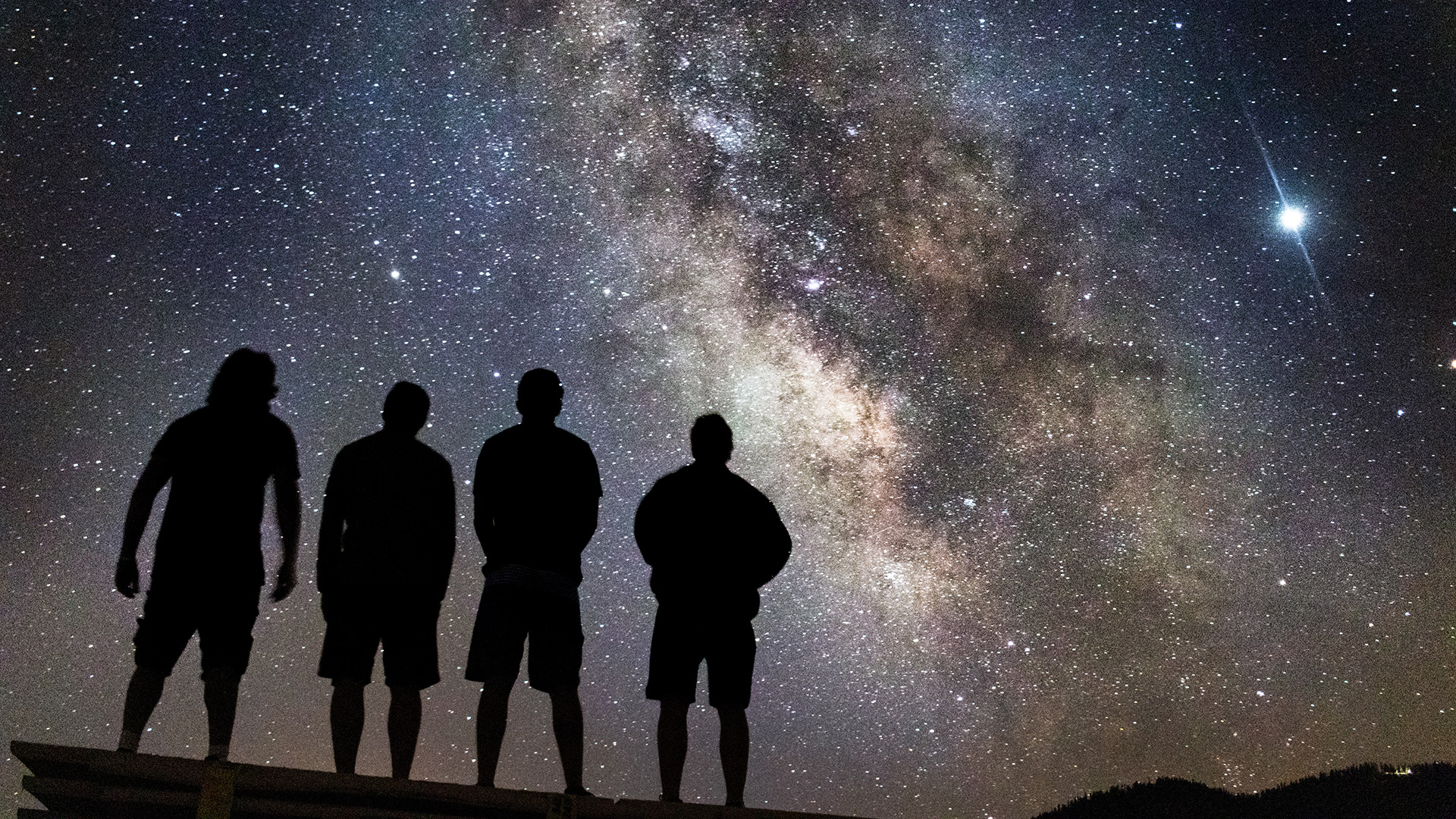
Beyond the bulge extends the galactic disk. This feature is 100,000 light-years across and 1,000 light-years thick, and it's home to the majority of the galaxy's stars, including our sun. Stars in the disc are dispersed in clouds of stellar dust and gas. When we look up to the sky at night, it's the edge-on view of this disc extending toward the galactic center that takes our breath away.
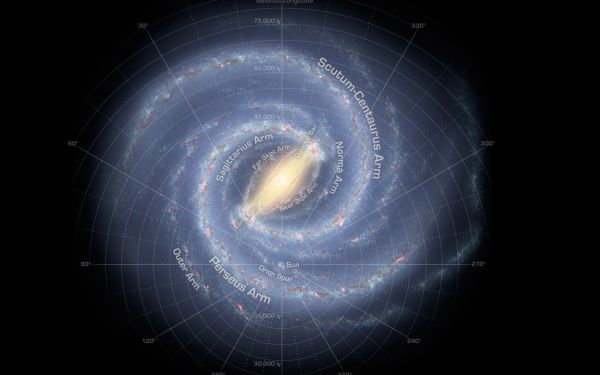
Stars in the disk orbit around the galactic center, forming swirling streams that appear to emanate like arms from the galactic bulge. Research into the mechanisms that drive the creation of the spiral arms is still in its infancy, but the latest studies suggest that these arms form and disperse within relatively short periods of time of up to 100 million years (out of the galaxy's 13 billion years of evolution).
Inside those arms, stars, dust and gas are more tightly packed than in the more loosely filled areas of the galactic disc, and this increased density triggers more intense star formation. As a result, stars in the galactic disc tend to be much younger than those in the bulge.
"Spiral arms are like traffic jams in that the gas and stars crowd together and move more slowly in the arms. As material passes through the dense spiral arms, it is compressed and this triggers more star formation," Denilso Camargo, of the Federal University of Rio Grande do Sul in Brazil, said in a statement.
The Milky Way currently has four spiral arms. There are two main arms — Perseus and Scutum-Centaurus — and the Sagittarius and Local Arm, which are less pronounced. Scientists still discuss the exact position and shape of these arms using Gaia data.
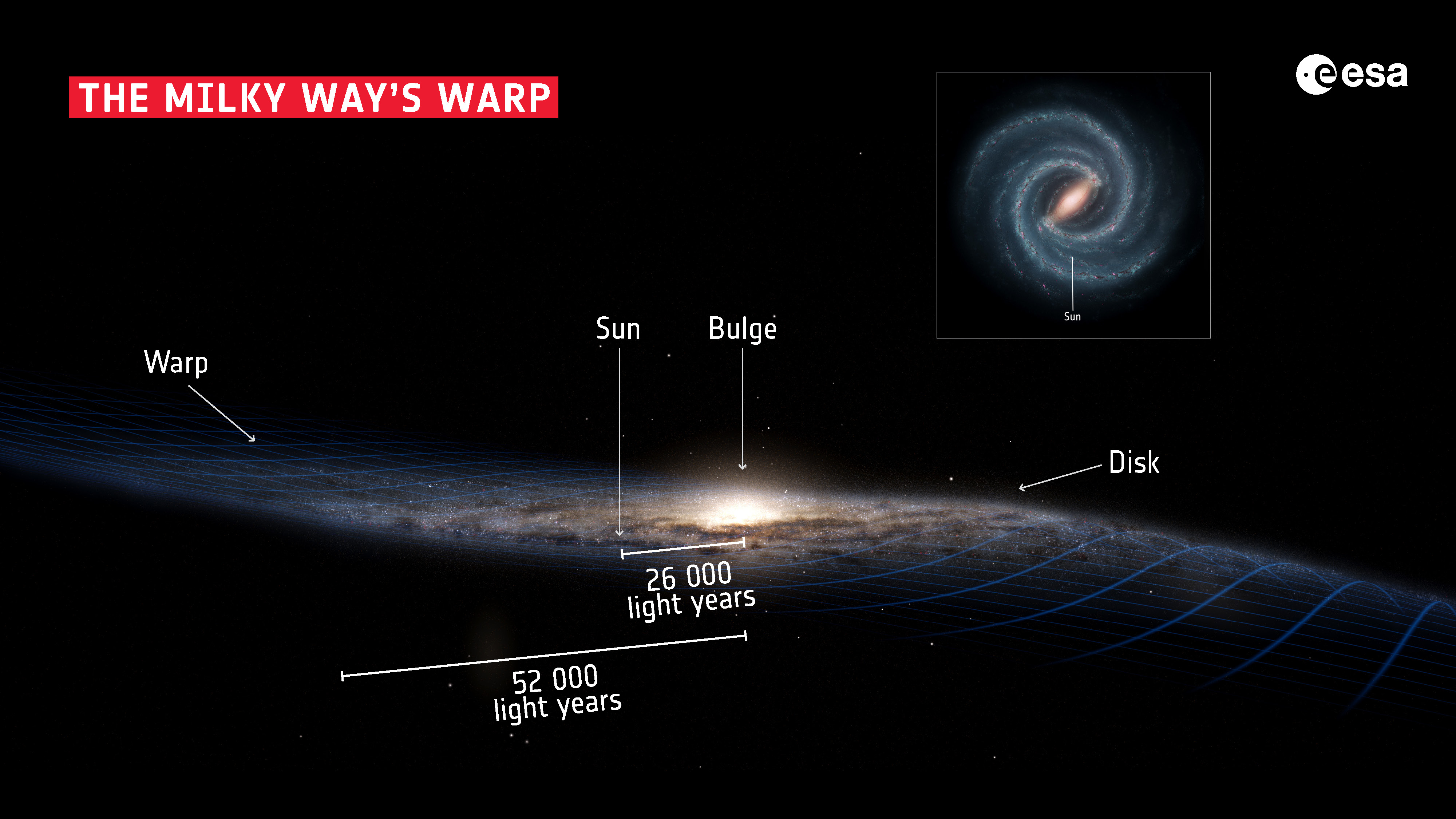
The disk is not flat but warped. As it rotates, it precesses like a wobbling spinning top, according to ESA. This wobble, essentially a giant ripple, circles the galactic center much more slowly than the stars in the disc, completing a full rotation in about 600 to 700 million years (for comparison, it takes our sun 230 million years to complete one lap.) Astronomers think this ripple may be a result of a past collision with another galaxy.
Sprinkled around the disc and the bulge are globular clusters, collections of ancient stars, as well as approximately 50 dwarf galaxies that are either orbiting or colliding with the larger Milky Way.
All of that is surrounded by a spherical halo of dust and gas, which is twice as wide as the disc. Astronomers believe that the entire galaxy is embedded in an even larger halo of invisible dark matter. Since dark matter doesn't emit any light, its presence can only be inferred indirectly by its gravitational effects on the motions of stars in the galaxy. Calculations suggest that this puzzling stuff makes up to 90% of the galaxy's mass.
"Even though we know the dark matter should be there, [and] we think it should be there, the ratio of dark matter to luminous matter in particular galaxies may be under debate," Gwendolyn Eadie, a Ph.D. candidate in astrophysics at McMaster University in Ontario, Canada, and co-author on the research, told Space.com.
The mass of the Milky Way, dark matter included, equals 1.5 trillion solar masses, according to recent estimates. The galaxy's visible matter is distributed between its 200 billion stars, their planets and the massive clouds of dust and gas that fill the interstellar space.
Related: Galaxies: Collisions, types and how they're made
Where is the sun in the Milky Way?
For us on Earth, the sun is precious and irreplaceable. Without its light and warmth, most life on Earth would not be possible. But in the galactic perspective, the sun is just one (rather ordinary) star out of 200 billion.
The sun orbits about 26,000 light-years from the black hole Sagittarius A*, roughly in the middle of the galactic disc. Travelling at the speed of 515,000 mph (828,000 kph), the sun takes 230 million years to complete a full orbit around the galactic center. That means the last time our planet was at the same exact place in the galaxy as it is today, it was dinosaurs who were awestruck by its star-studded vastness.
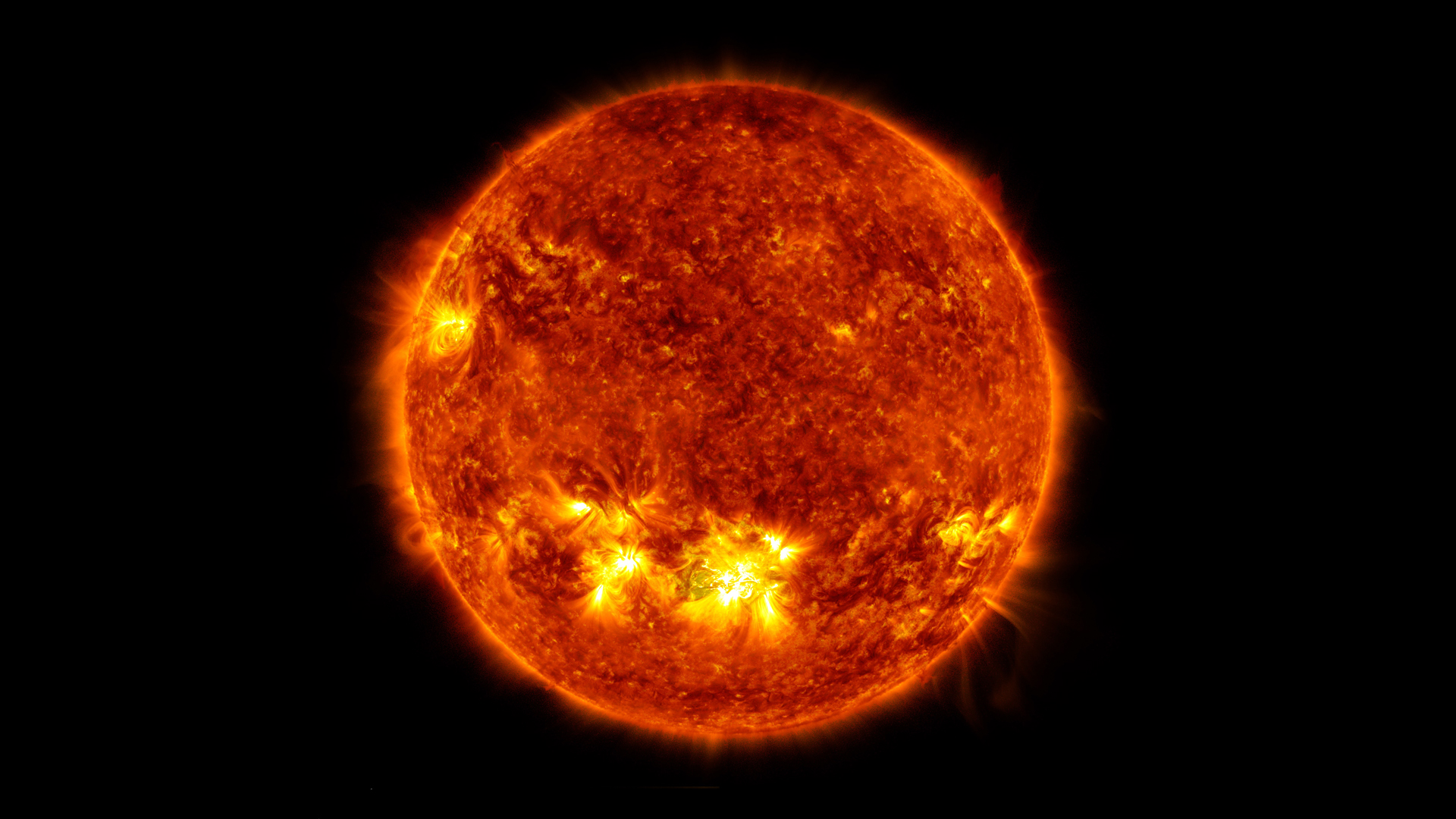
The sun sits near the edge of the Local Arm of the Milky Way, one of the two smaller spiral arms of the galaxy. In 2019, using data from the Gaia mission, astronomers found that the sun is essentially surfing a wave of interstellar gas that's 9,000 light-years long, 400 light-years wide and undulates 500 light-years above and below the galactic disc.
Planets of the solar system do not orbit in the plane of the galaxy, but are tipped by about 63 degrees.
"It's almost like we're sailing through the galaxy sideways," Merav Opher, an astrophysicist at George Mason University in Virginia, told Space.com.
How old is the Milky Way?
Astronomers believe the Milky Way is about 13.6 billion years old — only 200 million years younger than the universe.
The galaxy's evolution began when clouds of gas and dust started collapsing, pushed together by gravity. First stars sprung up from the collapsed clouds, those that we see today in the globular clusters. The spherical halo emerged soon after, followed by the flat galactic disc. The galaxy started small and grew as the inescapable force of gravity pulled everything together. The galaxy's evolution is, however, still shrouded in mystery.
A discipline called galactic archaeology is slowly unravelling some of the puzzles of the Milky Way's life thanks to the Gaia mission, which released its first catalog of data in 2018.
Gaia measures the exact positions and distances of 1 billion stars, as well as their light spectra, which enables scientists to understand the stars' composition and age. The position data allow astronomers to determine the speeds and directions in which the stars move in space. As things in space follow predictable trajectories, astronomers can reconstruct the paths of the stars billions of years into the past and future. Combining these reconstructed trajectories into one stellar movie captures the evolution of the galaxy over eons.
How did the Milky Way form?
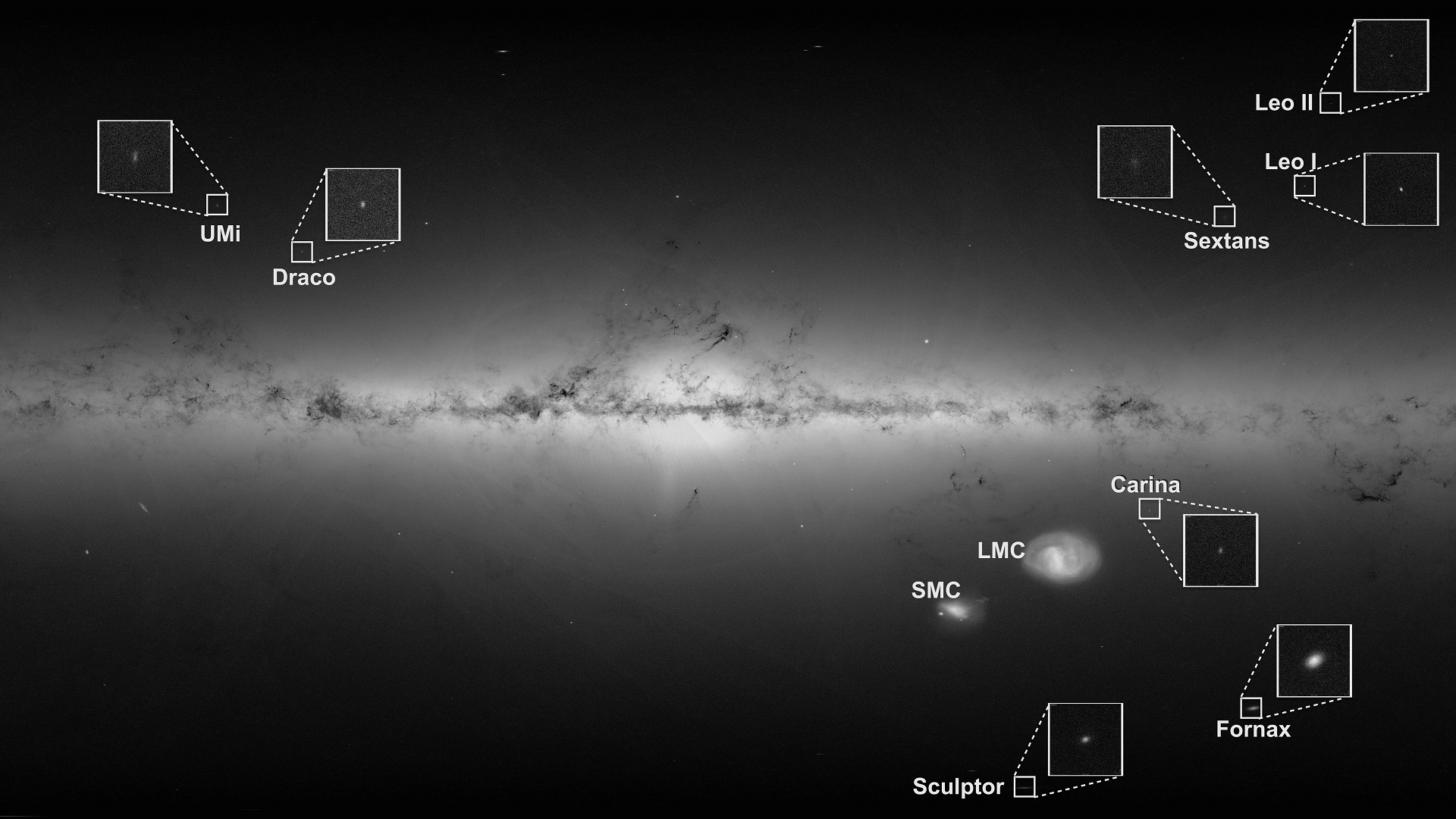
Fascinating insights emerged from this movie, revealing how the galaxy grew from collisions between smaller galaxies over billions of years.
In 2018, a team of Dutch astronomers found a group of 30,000 stars moving in sync through the sun's neighborhood in the opposite direction to the rest of the stars in the data set. The motion pattern matched what scientists had previously seen in computer simulations of galactic collisions.
These stars also differed in color and brightness, which suggested they came from a different galaxy.
Remnants of another, slightly younger, collision were spotted a year later. The Milky Way continues devouring smaller galaxies to this day. A galaxy called Sagittarius (not to be mistaken with the black hole) currently orbits close to the Milky Way and has likely smashed through its disc several times in the past 7 billion years. Using Gaia data, scientists found that these collisions triggered periods of intense star formation in the Milky Way and may even have something to do with the galaxy's trademark spiral shape. The study suggests that our sun was born during one of those periods some 4.6 billion years ago.
Our solar system: A photo tour of the planets
The future of the Milky Way research
Since the beginning of its operations, the Gaia mission has provided three updates to its massive stellar catalog. Astronomers from all over the world continue analyzing the data in search of new patterns and revelations. In fact, Gaia data currently generates more research papers than even the famous Hubble Space Telescope. In a recent "space telescope tournament", a jokey poll run by astronomers on Twitter, Gaia beat the veteran Hubble by five votes as the current darling of the astronomical community.
Gaia will continue charting the galaxy until at least 2022, and the catalog it has compiled will keep astronomers busy for decades to come.
Before Gaia, the largest dataset about positions and distances of stars in the Milky Way came from a mission called Hipparcos, after an ancient Greek astronomer who began charting the night sky 150 years before Christ. Hipparcos only saw about 100,000 of the brightest stars in the sun's neighborhood, compared to Gaia's one billion. The data was also less precise.
Even though Gaia sees less than 1% of stars in the galaxy, astronomers can expand its findings and model the behavior of the entire Milky Way.
Additional resources
- Guide to our galaxy from the European Space Agency (ESA)
- The anatomy of the Milky Way from ESA's Gaia mission.
- NASA's Milky Way Galaxy overview
- How does Gaia study the Milky Way? from ESA
- Why was it so difficult to study the Milky Way before Gaia?
Follow Tereza Pultarova on Twitter @TerezaPultarova . Follow us on Twitter @Spacedotcom and on Facebook .
Join our Space Forums to keep talking space on the latest missions, night sky and more! And if you have a news tip, correction or comment, let us know at: community@space.com.

Tereza is a London-based science and technology journalist, aspiring fiction writer and amateur gymnast. Originally from Prague, the Czech Republic, she spent the first seven years of her career working as a reporter, script-writer and presenter for various TV programmes of the Czech Public Service Television. She later took a career break to pursue further education and added a Master's in Science from the International Space University, France, to her Bachelor's in Journalism and Master's in Cultural Anthropology from Prague's Charles University. She worked as a reporter at the Engineering and Technology magazine, freelanced for a range of publications including Live Science, Space.com, Professional Engineering, Via Satellite and Space News and served as a maternity cover science editor at the European Space Agency.
Where Is Our Sun in the Milky Way Universe
Source: https://www.space.com/19915-milky-way-galaxy.html
0 Response to "Where Is Our Sun in the Milky Way Universe"
Post a Comment